Storing dry goods in bulk without them going stale

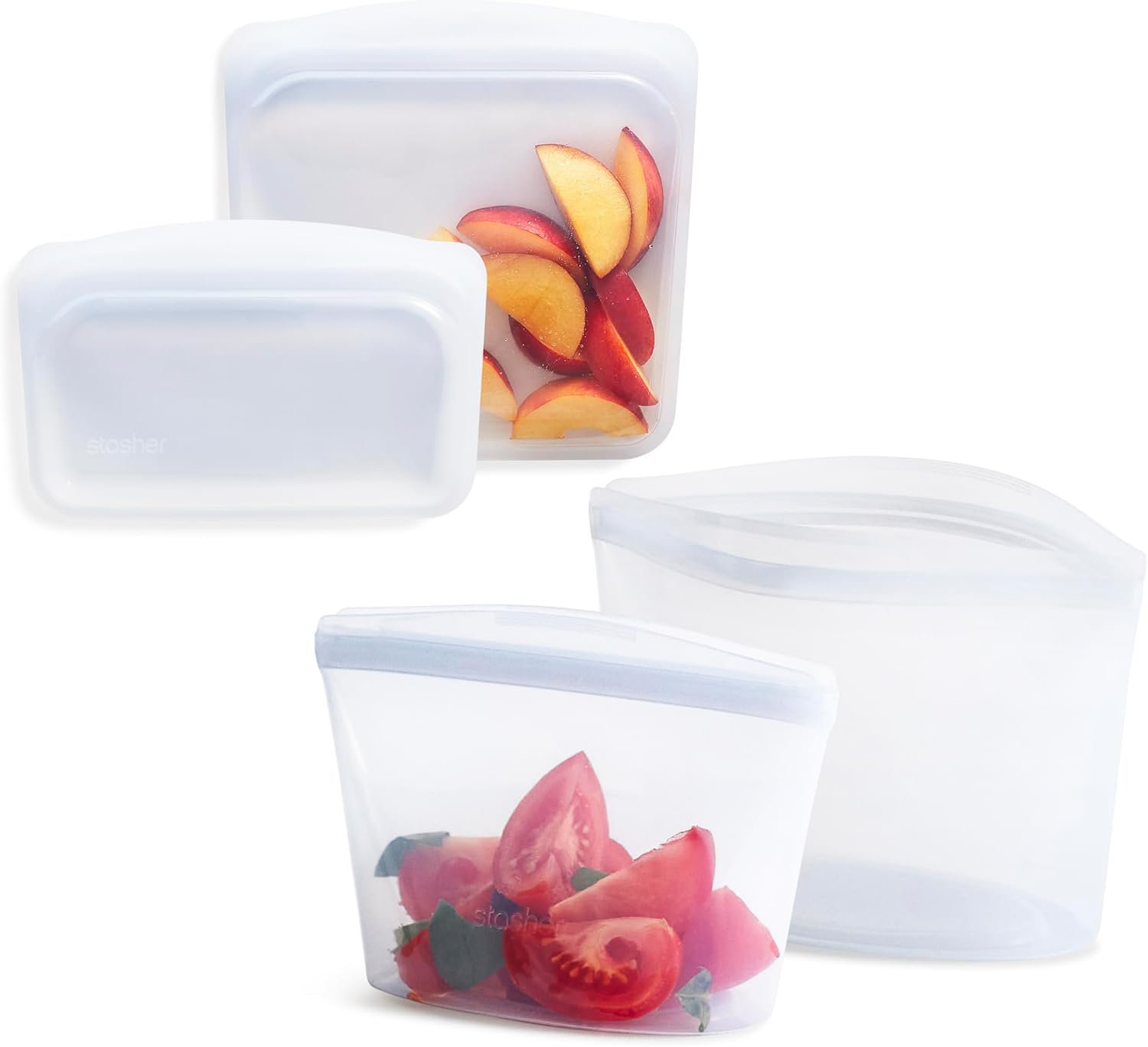
Bulk buying is straightforwardly cheaper per pound, and it goes wrong in a predictable way: the food degrades before it is used. Four things cause that — oxygen, moisture, light and pests — and dealing with them is what turns a bulk purchase into an actual saving.
Oxygen is what makes fats go rancid
Anything containing oil — brown rice, nuts, seeds, wholegrain flour — goes rancid through contact with air. White rice and refined flour last far longer because there is less fat to oxidise.
This is why storage advice differs so much between grains. Knowing whether what you are storing contains fat tells you how careful you need to be.
Mylar blocks light and oxygen in a way plastic does not
Ordinary clear plastic is somewhat permeable to oxygen and lets light through. Mylar bags have a metallised layer that blocks light entirely and is a much better oxygen barrier.
That combination is why mylar is the standard for long-term dry storage. For a bag of flour being used within a month it is unnecessary; for a sack being worked through over a year it is the difference.
Moisture is the fastest route to a ruined sack
Dry goods are hygroscopic — they pull moisture from the air. Once the moisture content rises, mould becomes possible and the texture changes.
Store somewhere dry and at a stable temperature. A cupboard against an exterior wall or near a stove sees swings that drive condensation, which is the practical thing to avoid.
Pests usually arrive in the food, not through the wall
Pantry moth and weevil eggs are commonly present in dry goods when bought and hatch later. That is why an unopened bag can develop an infestation.
Freezing a new bag for several days kills eggs before storage, and it is worth doing with any large quantity of grain or flour. It costs nothing but freezer space for a few days.
Decant into portions you actually use
Opening a large container repeatedly exposes the whole quantity to air and humidity every time. Splitting the bulk into smaller sealed portions means only one portion is exposed.
It also makes the store usable — a sack you have to wrestle with gets ignored in favour of a smaller packet from the shop.
Label with the date it was opened
Storage life runs from opening rather than from purchase, and after a few months nothing is distinguishable by eye. Undated containers are how bulk storage quietly turns into waste.
Contents and opening date on every container is enough, and it makes rotation possible.
Storage on our shelf
The mylar bags here are the long-term option and the reusable sets cover the smaller working portions. On our own shelf that range currently runs from $5.95 for the Glacier Home 8-Pack Reusable Gray Freezer Bags, Dishwasher Safe Food Storage up to $9.99 for the PTAZSCTC 12-Pack Reusable Silicone Food Storage Bags – Gallon, Sandwich & Snack Set, Grey.
These are drawn from Food Storage, which has 19 products on it right now. Prices here match the checkout total, with delivery quoted separately and never hidden.
- Glacier Home 8-Pack Reusable Gray Freezer Bags, Dishwasher Safe Food Storage — $5.95
- Tvrrhak 10-Pack DualSeal Reusable Gallon, Sandwich & Snack Bags, BPA Free — $7.99
- SZTCECDM 6-Pack Reusable Gallon Freezer Bags, 11" x 10.6" Leakproof Silicone Food Storage — $8.99
- Anelueeoo 10-Pack Reusable Freezer Bags: Gallon, Sandwich & Snack Sizes — $9.02
- Qinline 10-Pack Reusable Storage Bags: Gallon, Sandwich, & Snack Freezer Bags — $9.99
- PTAZSCTC 12-Pack Reusable Silicone Food Storage Bags – Gallon, Sandwich & Snack Set, Grey — $9.99
Related reading
Two other pieces on this site cover ground next to this one. A soggy lunch is nearly always a packing order problem rather than a food problem. And on a related note, almost every reusable tote fails in the same place, and it is not the fabric.
- Packing lunches that survive until midday
- Carrying the shopping home: what makes a tote worth keeping
The mistakes that spoil a bulk purchase
Storing everything in the original paper sack is the first. Paper is permeable to air, moisture and pests, and it was designed to get the product to a shop rather than to keep it for a year.
Keeping it in a warm cupboard is the second. Cupboards above a stove or against a hot wall cycle in temperature, and every cycle moves moisture within the container, which is what leads to clumping and mould at the edges.
Rotating stock so nothing is forgotten
The practical failure of bulk buying is not spoilage so much as forgetting. A container at the back of a cupboard gets passed over in favour of a newer one at the front, and eventually nobody is confident how old it is.
Putting new stock behind old, and writing the opening date on every container, turns a store into something usable. It takes seconds and it is the difference between bulk buying saving money and quietly wasting it.
A workable system
Freeze new bulk grain for a few days, then split it: the bulk into mylar somewhere cool, dark and dry, and a working portion into a reusable bag in the kitchen. Label both with the date. That handles all four causes of spoilage at once.
We dispatch from Los Angeles, CA. Carriage runs $5.95, waived over $49, with 30 days to send unused items back. Reach us at [email protected].