Carrying the shopping home: what makes a tote worth keeping

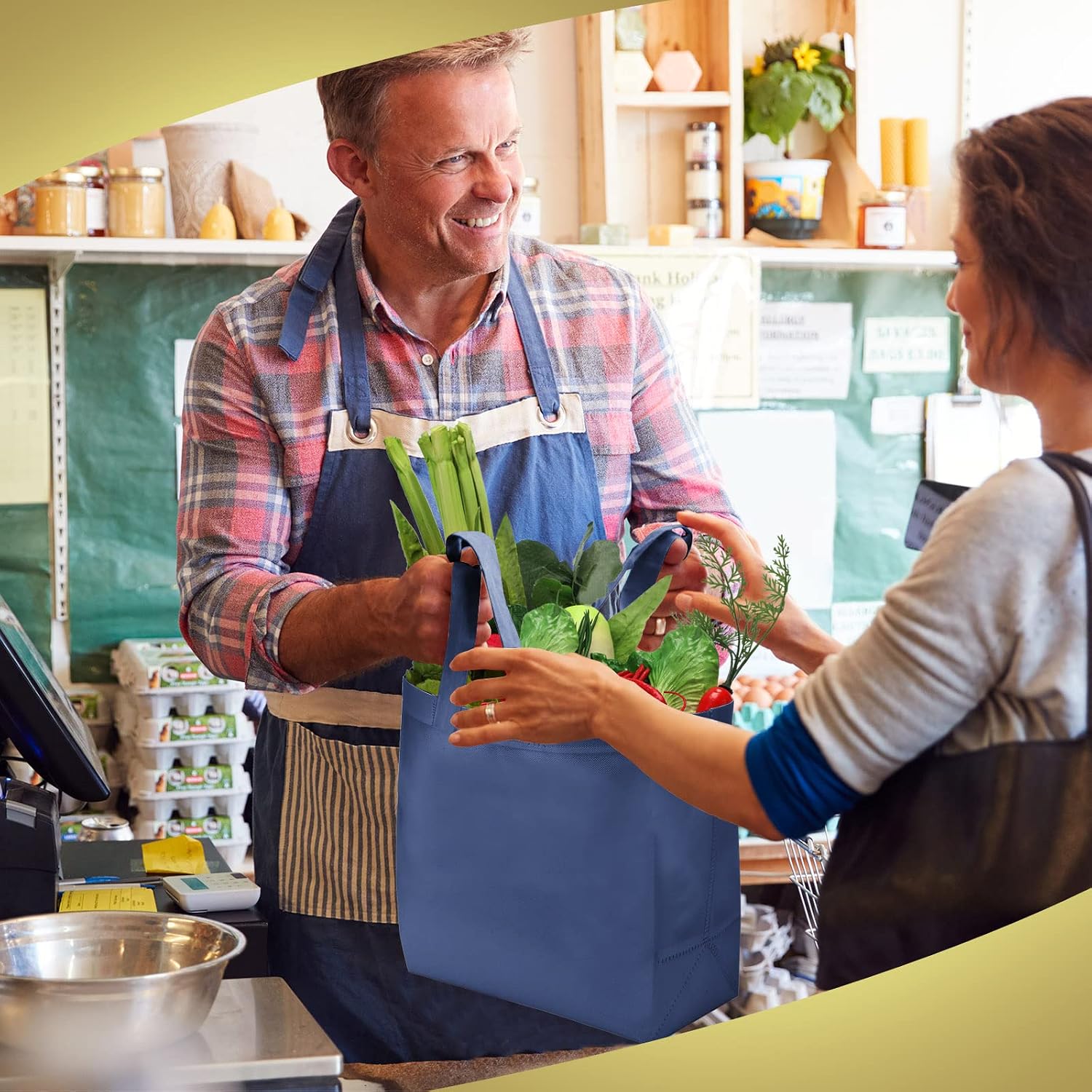
Most people accumulate reusable shopping bags without ever choosing one, and then discover that a few get used constantly and the rest stay in a cupboard. The ones that get used share a small number of properties, and the ones that fail nearly always fail at the same point.
Handles fail before fabric does
The load of a full bag concentrates entirely at the two points where the handles join the body. That join is where almost every tote gives way, usually by tearing the fabric rather than by the handle breaking.
Handles that run all the way under the base, or that are stitched across a wide area rather than a small patch, spread that load. It is the first thing worth looking at.
A reinforced base decides whether it holds shape
Without any structure at the bottom, a loaded bag becomes a sagging pouch that is awkward to carry and lets contents press against each other.
A separate base panel or a boxed bottom keeps the shape, which makes packing faster and stops tins landing on soft items.
Capacity is less useful than proportions
A very large tote is tempting and then too heavy to carry comfortably when full. Total volume matters less than whether the bag is a shape that packs sensibly against your body.
Two medium bags are usually easier to carry than one large one, and they distribute weight between both hands.
Non-woven, canvas and insulated do different jobs
Lightweight non-woven totes are cheap, fold small and are ideal to keep several of in a car. Canvas lasts far longer and washes well. Insulated bags matter for frozen goods over any real distance.
Owning a couple of each rather than a set of identical bags covers more situations, particularly if a shop involves a walk home.
It has to be washable, because it will need washing
Shopping bags carry raw meat packaging, leaking produce and whatever was on the trolley. A bag that cannot be washed becomes something you would rather not put food in.
Machine washable fabric, or at minimum a wipeable lining, is a genuine hygiene consideration rather than a convenience.
The bag you have with you is the one that counts
The most common reusable-bag failure is leaving them at home. Bags that fold into a pocket or live permanently in a car or rucksack are used; bags kept in a kitchen cupboard often are not.
Choosing a couple that pack down small, and deciding where they live, does more for actually using them than any feature of the bag itself.
Totes on our shelf
The non-woven totes here come in quantity, which suits keeping several in a car and treating them as a permanent fixture rather than something to remember. On our own shelf that range currently runs from $14.99 for the roonoo 24-Pack Reusable Food Storage Bags – Dishwasher Safe Gallon, Half-Gallon, Quart up to $54.99 for the Reginary 100-Pack Navy Blue Reusable Non-Woven Tote Bags with Handles.
These are drawn from Reusable Bags, which has 2 products on it right now. Prices here match the checkout total, with delivery quoted separately and never hidden.
- roonoo 24-Pack Reusable Food Storage Bags – Dishwasher Safe Gallon, Half-Gallon, Quart — $14.99
- Reginary 100-Pack Navy Blue Reusable Non-Woven Tote Bags with Handles — $54.99
Related reading
Two other pieces on this site cover ground next to this one. Liquid expands as it freezes, and a bag filled to the seam is a bag being asked to stretch. And on a related note, silicone absorbs oils, and most food smells are carried in oil. That is why a normal wash sometimes is not enough.
- Freezing food in reusable bags without splitting the seams
- Getting garlic and onion smells out of silicone for good
How bags actually fail
The join between handle and body carries the entire load at two small points, and that is where nearly every tote tears. It usually goes without warning, at the worst moment, with the heaviest load.
The second failure is the base seam on a bag with no reinforcement. Tins and bottles concentrate weight on a small area, and a single-layer base eventually opens along the stitching under that repeated point loading.
Cleaning bags that have carried food
Shopping bags carry leaking packaging and raw meat trays, and most people never wash them. A bag used weekly for a year without cleaning is a genuine hygiene problem rather than a theoretical one.
Machine washing a fabric tote every month or so, and wiping a non-woven one when anything leaks, takes care of it. Having enough bags that a couple can be in the wash is what makes the habit realistic.
What to look for
Handles that run under the base, a reinforced bottom, a size you can carry full, and fabric you can wash. Then decide where they will live so they are with you when you shop — which is the part that actually determines whether they get used.
We dispatch from Los Angeles, CA. Carriage runs $5.95, waived over $49, with 30 days to send unused items back. Reach us at [email protected].