Freezing food in reusable bags without splitting the seams

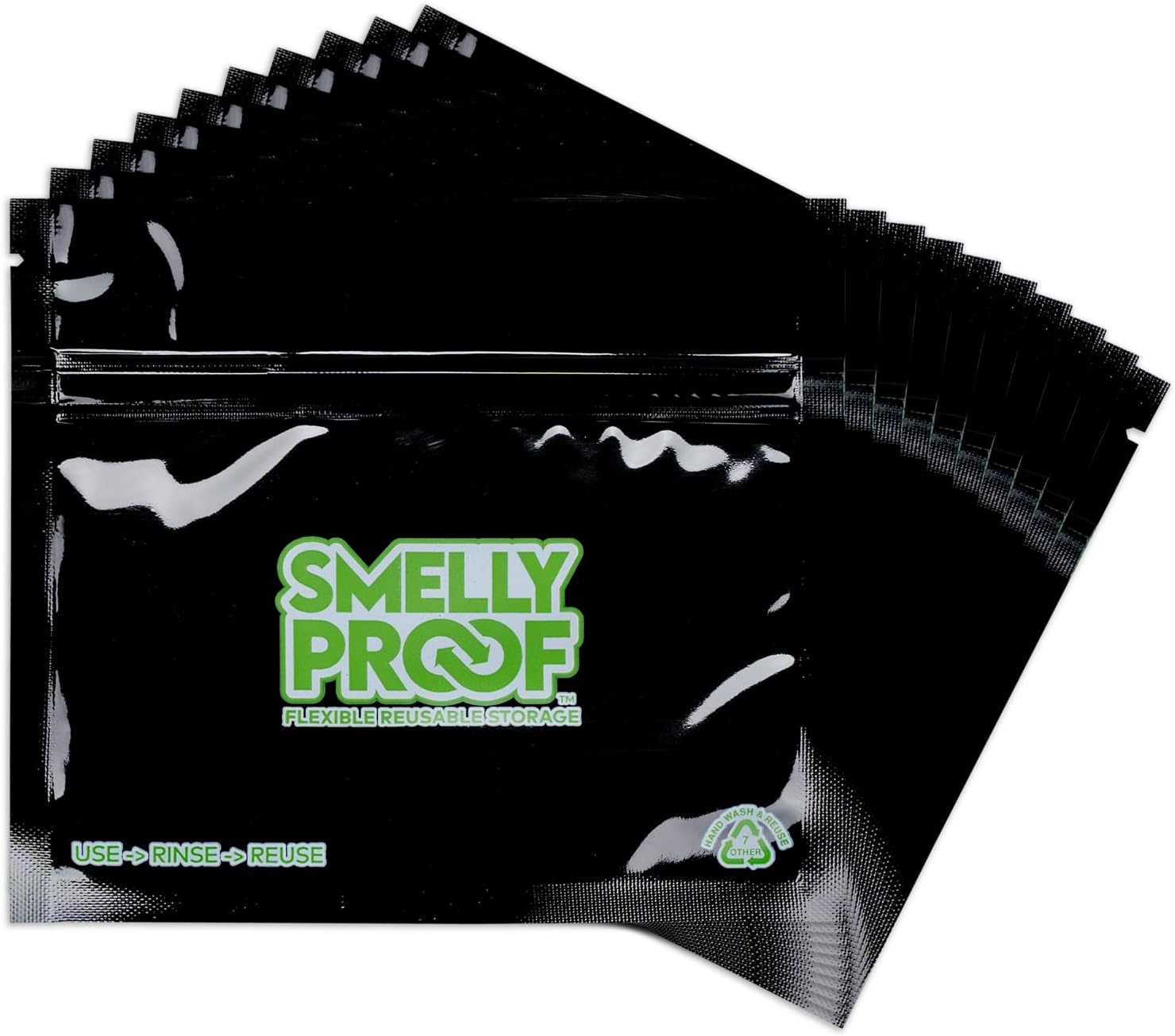
Reusable bags are at their most useful in the freezer, and the freezer is also where they are most often damaged. Almost all of that damage comes from one physical fact that is easy to work around once you plan for it: water takes up roughly a tenth more space as ice than it does as liquid.
Leave headroom, and leave it deliberately
A bag filled level with the seal has nowhere to put that extra volume, so the pressure goes into the seam and the closure. Repeated over many cycles, that is what eventually opens a seam.
Filling to around three quarters and pressing out the air gives the contents room to expand into. It is the single habit that most extends the life of a freezer bag.
Freeze flat, then store upright
Laying a filled bag flat until it is solid gives you a thin slab that stacks, stores in a fraction of the space, and thaws far faster because of the surface area.
Once frozen solid, those slabs can be filed upright like books. It is the most efficient way to use a freezer drawer and it makes finding things possible.
Push the air out, but do not vacuum-compress
Air in the bag causes freezer burn by letting moisture migrate from the food to the coldest surface. Pressing air out before sealing addresses that.
What you do not want is to force the contents hard against the seal while doing it. Press from the bottom up with the bag flat and stop at the point the food reaches the closure.
Label the bag, not your memory
Everything looks the same once frozen, and the honest failure mode of reusable bags is food staying in the freezer past usefulness because nobody could identify it.
A grease pencil or a removable label costs nothing. Contents and date is enough.
Thaw in the fridge or in cold water, not with heat
Silicone tolerates a wide temperature range, but repeated extreme swings are hard on any material, and hot water on a frozen bag is a large swing.
Fridge thawing is best; a bowl of cold water is the fast alternative. If a bag is rated for the microwave the listing will say so, and if it does not say so, do not assume it.
Check the closure before every freeze
A single crumb or a smear of oil in the zip track is enough to stop a seal closing fully, and a bag that is not fully closed will leak as it thaws.
Running a finger along the track before sealing takes a second. This is the cause of the large majority of leak complaints about reusable bags.
Bags suited to freezing
The silicone and freezer-rated bags on this shelf are the ones built for this, and the listings say which lines are freezer safe. On our own shelf that range currently runs from $5.95 for the Glacier Home 8-Pack Reusable Gray Freezer Bags, Dishwasher Safe Food Storage up to $9.99 for the PTAZSCTC 12-Pack Reusable Silicone Food Storage Bags – Gallon, Sandwich & Snack Set, Grey.
These are drawn from Food Storage, which has 19 products on it right now. Prices here match the checkout total, with delivery quoted separately and never hidden.
- Glacier Home 8-Pack Reusable Gray Freezer Bags, Dishwasher Safe Food Storage — $5.95
- Tvrrhak 10-Pack DualSeal Reusable Gallon, Sandwich & Snack Bags, BPA Free — $7.99
- SZTCECDM 6-Pack Reusable Gallon Freezer Bags, 11" x 10.6" Leakproof Silicone Food Storage — $8.99
- Anelueeoo 10-Pack Reusable Freezer Bags: Gallon, Sandwich & Snack Sizes — $9.02
- Qinline 10-Pack Reusable Storage Bags: Gallon, Sandwich, & Snack Freezer Bags — $9.99
- PTAZSCTC 12-Pack Reusable Silicone Food Storage Bags – Gallon, Sandwich & Snack Set, Grey — $9.99
Related reading
Two other pieces on this site cover ground next to this one. Silicone absorbs oils, and most food smells are carried in oil. That is why a normal wash sometimes is not enough. And on a related note, the switch is worth making for most uses and not for all of them, and the maths is easy enough to do yourself.
- Getting garlic and onion smells out of silicone for good
- Reusable versus disposable: working out when it actually pays off
Mistakes that shorten bag life in a freezer
Overfilling is the first and the most damaging, because frozen contents cannot yield and the pressure goes into the seam. A bag filled to the closure is being asked to stretch at exactly the point it cannot.
Forcing a frozen bag open is the second. Cold silicone and PEVA are considerably less flexible than at room temperature, and levering a stiff closure apart is how zip tracks get deformed and stop sealing afterwards.
Knowing when a bag should be retired
Check the seam and the closure rather than the film. A bag whose zip no longer produces a continuous seal along its whole length has failed, even if the body looks perfect.
Cloudiness or a slightly tacky feel in silicone after long use is cosmetic. A split at a corner, a track that will not close, or a bag that weeps when laid on its side full of water are the genuine end-of-life signals.
The routine that keeps bags alive
Fill to three quarters, press the air out from the bottom, check the track, seal, freeze flat, then file upright. Thaw cold. Bags treated that way last through hundreds of cycles instead of splitting in the first winter.
We dispatch from Los Angeles, CA. Carriage runs $5.95, waived over $49, with 30 days to send unused items back. Reach us at [email protected].